
How Can Schools Keep Students Safe During Group Travel?
Keeping students safe during group travel requires reliable transportation, qualified professional drivers, appropriate supervision, and a clear travel plan. Schools and youth organizations can reduce transportation risks by choosing a reputable charter bus company, verifying safety standards, establishing student accountability procedures, and preparing for emergencies before departure.
Planning a school field trip, athletic event, educational tour, or overnight excursion involves more than organizing activities. Student safety must remain the top priority from departure to arrival. Transportation plays a critical role in making that happen.
At The Coach Company, we understand how important dependable group transportation is for schools, teachers, parents, and youth program organizers. With experience serving groups throughout New England and beyond, our team helps simplify travel logistics so educators can focus on their students instead of navigating traffic, coordinating multiple vehicles, or managing complicated routes.
Whether your group is traveling to a museum, competition, college campus, or educational destination, thoughtful planning and professional transportation can help create a safer, more enjoyable experience for everyone.
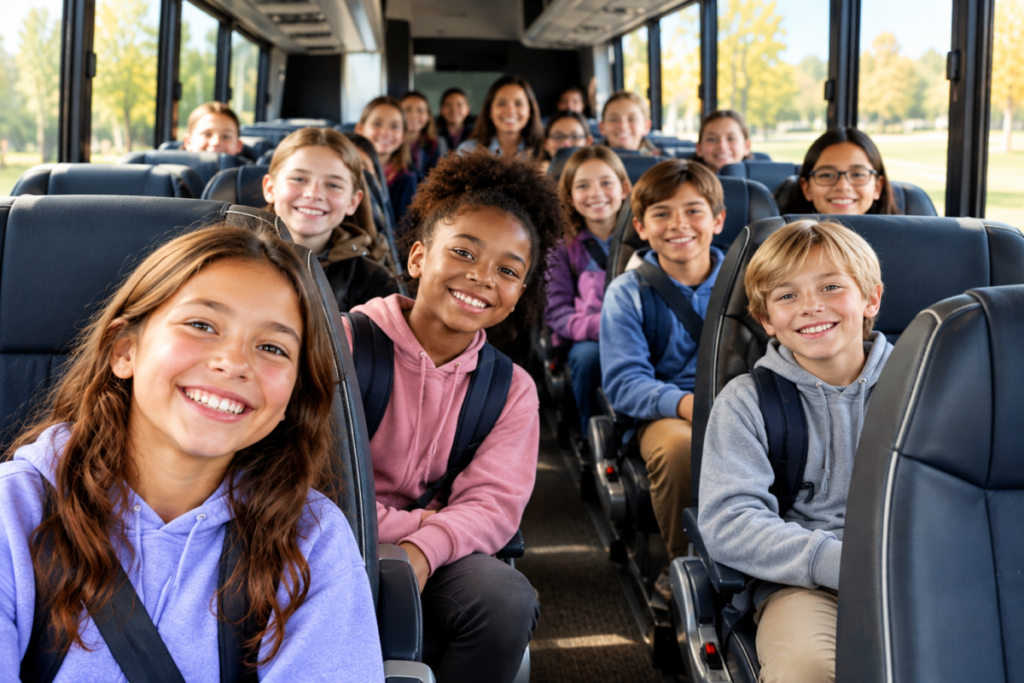
Student Transportation Safety: Essential Steps for Schools and Youth Groups
Student transportation safety depends on several factors, including vehicle maintenance, driver qualifications, adult supervision, and effective communication. Taking a proactive approach helps schools identify potential risks and establish procedures that protect students throughout their journey.
1. What Should Schools Look for in a Safe Charter Bus Company?
A reputable charter bus company should prioritize passenger safety through qualified drivers, properly maintained vehicles, and compliance with applicable transportation regulations.
According to the Federal Motor Carrier Safety Administration (FMCSA), schools and group organizers can review a motorcoach company’s federal safety information before booking transportation.
When evaluating a transportation provider, consider the following:
- Driver qualifications: Confirm that drivers hold the appropriate commercial driver’s license and required endorsements.
- Vehicle maintenance: Ask about inspection schedules and preventive maintenance procedures.
- Federal safety records: Review the carrier’s operating authority and available safety information.
- Insurance coverage: Verify that the transportation company maintains required commercial insurance.
- Safety equipment: Ask about seat belts, emergency exits, and other passenger safety features.
Schools should also confirm that the transportation provider can accommodate their specific group size, luggage requirements, and travel itinerary.
The Coach Company helps schools and youth organizations coordinate charter bus transportation suited to their travel needs, making it easier to organize trips with safety and reliability in mind.
2. How Do Professional Charter Bus Drivers Improve Student Safety?
Professional charter bus drivers help improve student safety by handling vehicle operation, navigation, traffic conditions, and transportation logistics while teachers and chaperones supervise students.
Commercial motorcoach drivers must meet applicable licensing and qualification requirements. Federal regulations also establish hours-of-service limits intended to reduce risks associated with driver fatigue.
The FMCSA generally limits passenger-carrying commercial drivers to 10 hours of driving after eight consecutive hours off duty, subject to other applicable restrictions and exceptions.
Professional drivers provide several important advantages:
- Experience operating large vehicles: Commercial drivers are trained to handle motorcoaches and understand their operating requirements.
- Route management: Drivers can navigate highways, unfamiliar roads, and designated pickup locations.
- Attention to road conditions: Drivers monitor traffic, weather, and changing travel conditions.
- Reduced distractions for educators: Teachers can concentrate on supervising students instead of driving.
For schools planning longer educational trips or athletic travel, professional transportation also reduces the need to coordinate several separate vehicles.
This creates a more organized travel experience and helps keep everyone following the same schedule.
3. What Safety Procedures Should Teachers Follow Before and During a Trip?
Teachers and chaperones should establish clear safety expectations, maintain accurate student counts, and communicate transportation procedures before departure.
A successful school trip begins with preparation. Even when professional transportation is arranged, adult supervision remains essential.
Before the trip, organizers should:
- Create an accurate passenger list. Include student names, assigned chaperones, and emergency contact information.
- Establish supervision assignments. Make sure each adult knows which students they are responsible for.
- Review bus safety rules. Explain expectations for remaining seated, wearing seat belts when provided, and avoiding distractions.
- Share the itinerary. Provide departure times, destinations, planned stops, and return details.
- Prepare emergency information. Ensure authorized staff can access necessary medical and emergency contact details.
During travel, chaperones should conduct headcounts before departure and after every scheduled stop.
Students should also understand how to safely board and exit the bus, follow driver instructions, and remain with their assigned groups.
The National Highway Traffic Safety Administration (NHTSA) emphasizes the importance of safe school transportation practices, including appropriate passenger protection and vehicle safety.
Clear expectations and consistent supervision help reinforce those practices throughout the trip.
4. How Can Schools Prepare for Transportation Emergencies?
Schools can prepare for transportation emergencies by establishing communication procedures, identifying responsible adults, and reviewing emergency response plans before the trip.
Unexpected situations, including severe weather, traffic delays, vehicle problems, or medical emergencies, can occur during group travel.
A transportation emergency plan should address:
- Emergency contacts: Identify school administrators, parents, and emergency services contacts.
- Communication responsibilities: Designate who will communicate updates to families and school personnel.
- Medical considerations: Ensure authorized chaperones understand relevant student health needs and school policies.
- Emergency evacuation: Review the location of emergency exits and follow driver instructions.
- Backup arrangements: Discuss how transportation disruptions will be handled.
For longer trips, organizers should also account for potential schedule changes and communicate expectations with the transportation provider.
In New England, changing weather conditions can affect travel throughout the year. Snow, ice, heavy rain, and reduced visibility may require adjustments to departure times or routes.
Building flexibility into the itinerary helps organizers make safety-focused decisions when conditions change.
5. Why Is Keeping Students Together on One Charter Bus Safer and Easier to Manage?
Keeping students together on one appropriately sized charter bus simplifies supervision, improves communication, and reduces the logistical challenges of coordinating multiple vehicles.
When students travel in separate cars or smaller groups, organizers must manage multiple drivers, arrival times, parking locations, and communication channels.
A single charter bus offers several practical benefits:
- Simpler student accountability: Chaperones can conduct headcounts and monitor assigned students in one location.
- Coordinated arrival times: The group reaches destinations together, reducing scheduling confusion.
- Consistent safety instructions: All passengers receive the same transportation guidance.
- Easier communication: Teachers can share announcements and itinerary updates with the entire group.
- Less complicated logistics: Organizers can coordinate one primary transportation schedule.
A charter bus does not eliminate every travel risk, and groups must still maintain appropriate supervision and safety procedures. However, centralized transportation can make student management significantly more efficient.
For larger school groups requiring multiple buses, assigning students and chaperones to specific vehicles provides similar organizational benefits.
Frequently Asked Questions About Student Group Travel Safety
Are charter buses a safe option for school field trips?
Charter buses can be a safe transportation option when operated by properly qualified drivers and reputable companies that follow applicable safety and maintenance regulations. Schools should verify a carrier’s credentials and safety information before booking.
How many chaperones should accompany students on a charter bus?
The appropriate number depends on student ages, group size, individual needs, destination requirements, and school policies. Organizers should follow their institution’s supervision guidelines and assign clear responsibilities to each adult.
Should students wear seat belts on charter buses?
Students should use seat belts whenever they are provided, following the driver’s instructions and applicable requirements. Federal rules require lap-and-shoulder belts at passenger seating positions on many newer large motorcoaches, although requirements vary by vehicle type and model year.
How far in advance should schools book charter bus transportation?
Schools should book as early as possible, particularly for spring field trips, graduation activities, athletic competitions, and other high-demand travel periods. Early reservations provide more time to coordinate vehicle availability, passenger requirements, and schedules.
Plan Safer Student Group Transportation With The Coach Company
Student safety starts long before the bus leaves the parking lot. Choosing professional transportation, establishing clear supervision procedures, and preparing for unexpected situations can make school trips more organized and less stressful.
At The Coach Company, we’re committed to helping schools, youth organizations, and educational groups plan dependable transportation for their next adventure.
Ready to organize safe, convenient transportation for your students? Contact The Coach Company today to discuss your upcoming trip and request a charter bus quote.